


Linea continues to grow as one of the most accessible zkEVM networks in 2026, offering familiar Ethereum tooling, predictable low fees and security built on zk-proof technology. Its developer-friendly design makes it easy for teams to deploy existing EVM applications with minimal modifications, while the network’s strong performance and scalability attract a steady inflow of new users. As the ecosystem expands, bridging becomes the first major touchpoint for many newcomers, making the quality and reliability of cross-chain transfers a critical part of the Linea experience.
With interest in the network rising, users increasingly expect smooth execution, transparent routing and transfers that finalize without unnecessary delays. Bridge providers have responded by strengthening audits, optimizing routing logic and widening support for stablecoins and key ERC-20 assets. These improvements help ensure that liquidity can enter Linea consistently, even during periods of elevated market activity. A dependable bridging layer is especially important now that DeFi protocols, on-chain tools and consumer-facing applications continue launching on Linea.
Because Linea appeals to both developers seeking a scalable environment and mainstream users who value simplicity, bridging must remain intuitive and stable. Any friction or uncertainty in this process directly impacts user trust and slows down ecosystem expansion. Reliable bridging ensures projects can onboard liquidity quickly, users can participate in on-chain activity without hurdles, and applications can maintain the fluid capital flows necessary for growth.
This updated 2026 list highlights the bridges that deliver the strongest combination of safety, transparency and ease of use for Linea. These solutions provide the dependable cross-chain connectivity needed to support Linea’s growing role as a high-performance zkEVM network within the broader multi-chain ecosystem.
Here are some of the top cross-chain bridges connecting Linea to other blockchains
Defiway
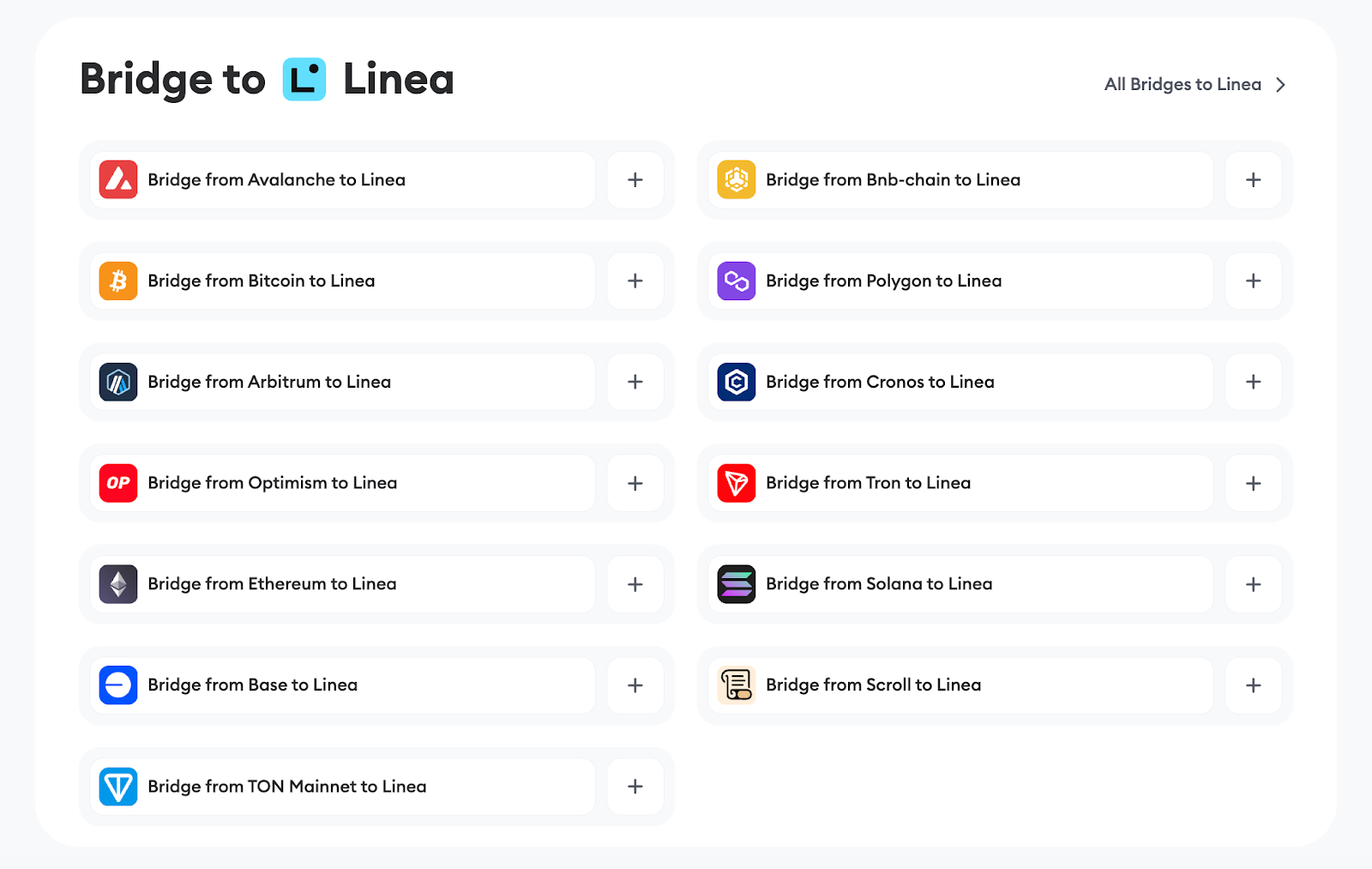
Features
- Fastest exchange speed;
- Commission only 0.2% of the transaction amount and the transactions are almost instantaneous;
- Convenient mobile wallet app;
- 10+ number of blockchains supported.
Defiway is one of the few bridges which supports not only various EVM networks, but also Tron and Solana. Defiway’s smart contracts are audited by Certik. There were no hacks or other incidents involving this cross-chain bridge during it’s lifetime (Defiway is on the market for almost 2 years).
Synapse Protocol
- Features: Supports over 20 blockchains and hundreds of assets, offers decentralized liquidity pools for efficient swaps, and prioritizes security with multi-sig wallets and regular audits.
- Number of Blockchains Supported: 20+
- Additional Information: Synapse is known for its robust security measures and user-friendly interface, making it a popular choice for both experienced and novice users.
Connext Network
- Features: Enables atomic swaps for direct asset exchanges, supports various chains and assets, and emphasizes user experience with a simple and intuitive interface.
- Number of Blockchains Supported: 15+
- Additional Information: Connext is a versatile bridge that offers a wide range of features, including support for multiple chains and assets, as well as atomic swaps for efficient and secure transactions.
Orbiter Finance
- Features: Focuses on ease of use and user experience, provides a streamlined interface for transferring assets, and supports a growing number of chains and assets.
- Number of Blockchains Supported: 10+
- Additional Information: Orbiter is a beginner-friendly bridge that offers a simple and intuitive interface, making it easy for users to transfer assets between different blockchains.
LayerSwap
- Features: Offers a wide range of supported chains and assets, provides competitive fees and fast transaction times, and is known for its reliable and efficient service.
- Number of Blockchains Supported: 30+
- Additional Information: LayerSwap is a comprehensive bridge that supports a large number of chains and assets, making it a versatile option for users with various needs.
Hop Protocol
- Features: Specializes in transferring stablecoins between different chains, offers low fees and fast transaction speeds, and utilizes a network of liquidity pools for efficient transfers.
- Number of Blockchains Supported: 5+
- Additional Information: Hop Protocol is a specialized bridge that focuses on stablecoin transfers, making it a great option for users who need to move stablecoins between different chains.
Celer Network
- Features: Provides a suite of scaling solutions, including cross-chain bridges, offers fast and secure transactions, and supports a wide range of blockchains and assets.
- Number of Blockchains Supported: 20+
- Additional Information: Celer Network is a versatile platform that offers a variety of scaling solutions, including cross-chain bridges, making it a great option for users who need to interact with multiple blockchains.
Conclusion
The best Linea bridge for your needs may depend on factors such as the specific assets you’re swapping, speed, and fees. Always do your own research. Among the bridges we mentioned, Defiway should be singled out. This bridge has no problems with liquidity, so you can swap any amounts. Speed and fees are also among the best. And the support of the Solana and Tron networks clearly distinguishes this bridge among the others.