


Cross-chain interoperability has become a fundamental expectation in 2026, as users increasingly navigate a world where assets constantly move between Ethereum, L2 rollups, sidechains, app-chains, and fast non-EVM environments. The multi-chain era is no longer a trend - it is the default mode of interacting with crypto, and bridges now function as the connective tissue holding this fragmented ecosystem together.
Users want predictable fees, clear routing, strong audits, and transfers that finalize quickly even during peak market volatility. As more networks launch and liquidity spreads across dozens of ecosystems, reliable bridging becomes as important as wallet choice or exchange liquidity.
The most relevant bridges in 2026 are those that consistently deliver safety, speed and convenience, while minimizing friction for everyday users. With competition increasing and new protocols offering novel routing methods, understanding which bridges can be trusted becomes essential.
This updated 2026 list highlights bridging solutions that truly stand out for their performance, reliability and stability in a maturing multi-chain environment.
Defiway
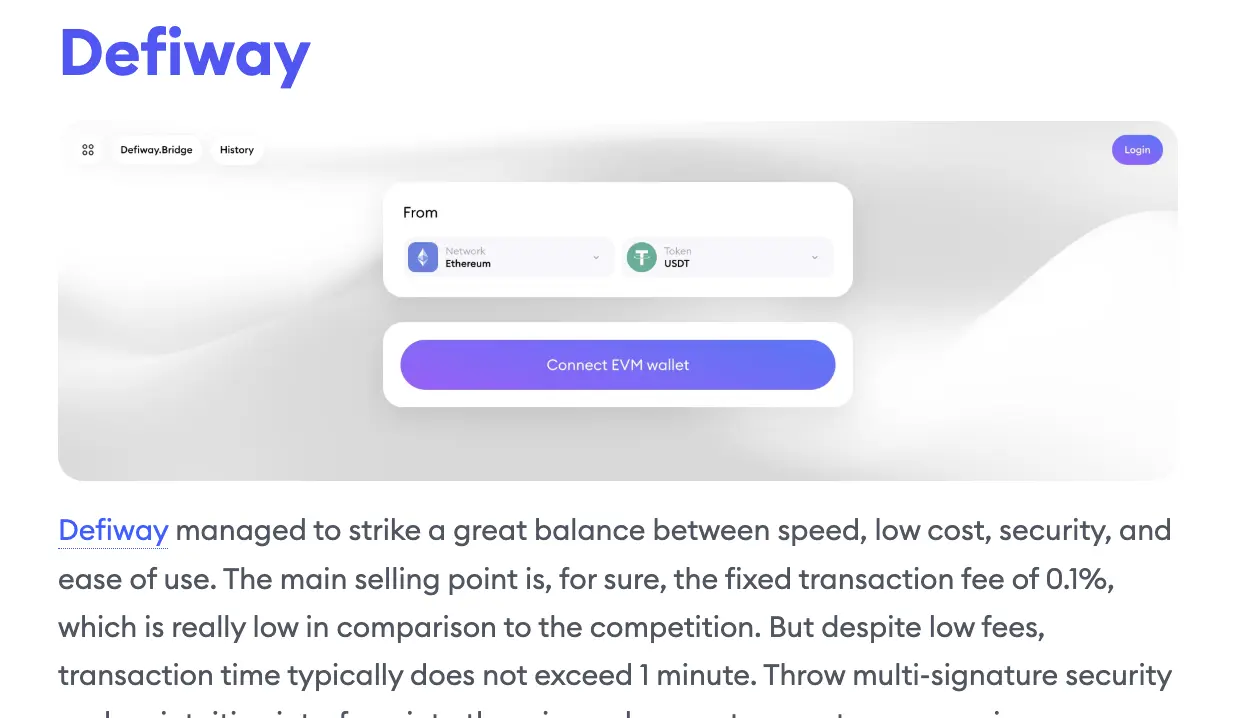
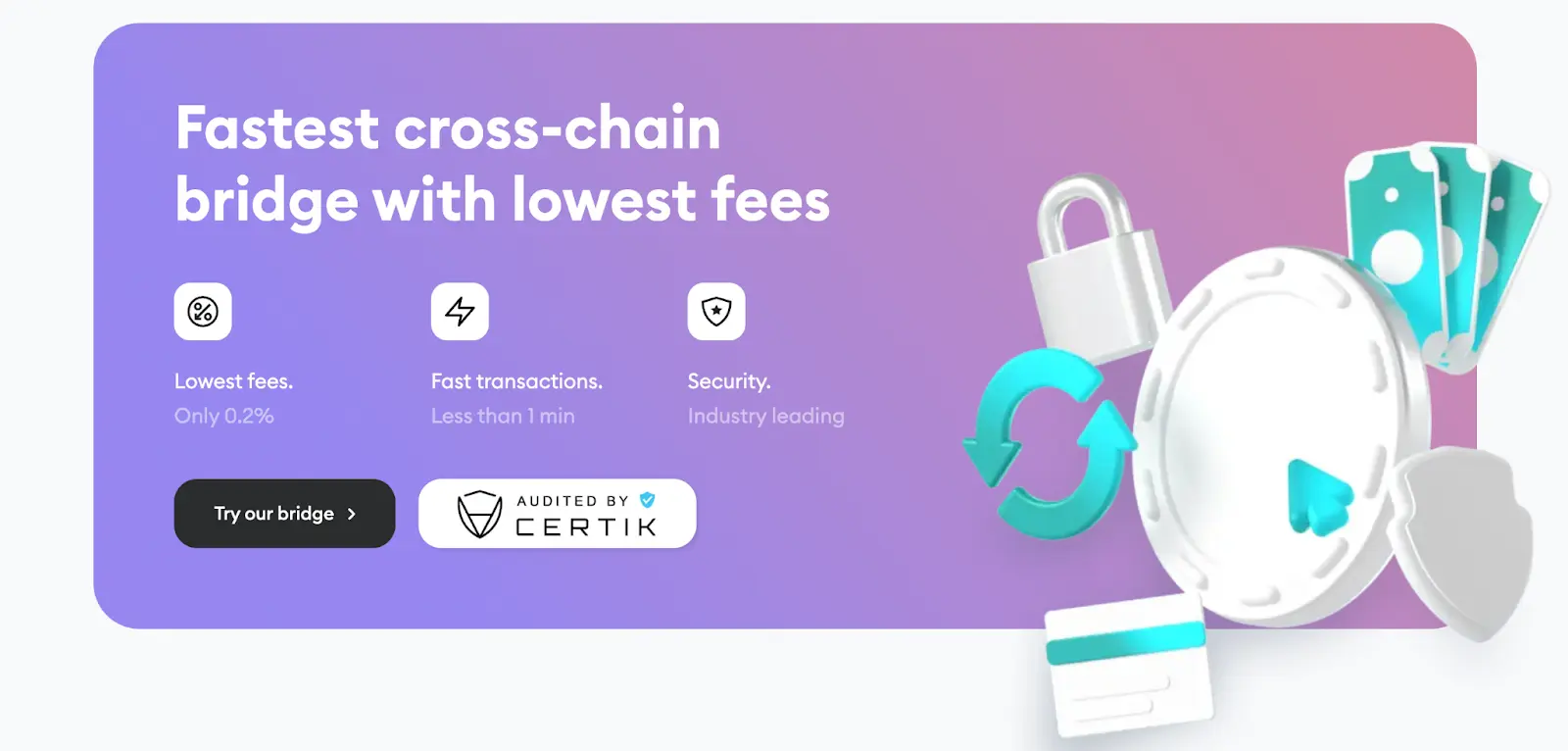
Defiway managed to strike a great balance between speed, low cost, security, and ease of use. The main selling point is its fixed transaction fee model (commonly highlighted as 0.2%), which is low compared to many competitors, while transaction time typically does not exceed 1 minute. Add multi-signature security and an intuitive interface, and you get a smooth “daily-driver” bridge experience. In 2026, that predictability matters even more because users increasingly bridge during volatile market spikes, where “unknown fees + unknown timing” is the worst combo. Defiway’s UX stays simple: you see what you’ll pay and you don’t need five tabs open to complete one transfer.
Defiway also supports major blockchain networks, including Tron, which still isn’t universally supported by many bridging front-ends. A practical bonus for 2026: you can manage bridging alongside other core actions (wallet + treasury flows) inside the same mobile app, so you’re not constantly hopping between products. This “all-in-one” approach is especially useful for users who move assets daily between EVM chains and faster environments like Tron, because it reduces operational mistakes (wrong network, wrong token, wrong route). It’s also a strong fit for routine treasury operations where speed and clarity beat fancy routing.
Synapse Protocol
The main selling point of Synapse Protocol is its intuitive interface and ease of use. Most other parameters are middle-of-the-road, and the lack of Tron support hampers the platform a bit. Overall, it is a good “noob-friendly” bridge and often works well for straightforward EVM-to-EVM moves when you don’t need anything fancy. It’s a solid option when your goal is “just get it across” without diving into complex routing, which is why many users keep it as a backup bridge. Synapse is also convenient for common stablecoin moves across mainstream EVM networks.
Portal Bridge
Portal Bridge is one of the most popular solutions for swapping assets on blockchains that are not EVM-compatible. It also supports EVM blockchains, but its broad interoperability remains the key advantage, alongside respectable transaction speed. Fees can sometimes spike because Portal relies on the gas fee model, so congested origin or destination chains can make “simple” transfers unexpectedly expensive. The big win is reach: when you need to touch non-EVM ecosystems, Portal is often one of the first bridges users check. Just treat it like “gas-sensitive infrastructure” and plan transfers outside peak congestion if possible.
Orbiter.finance
Orbiter.finance is a large L2-focused platform in the Ethereum ecosystem that provides not only bridging services but also useful ecosystem data (rollups, dApps, and more). The bridge itself is efficient and fast for many common L2 routes. The tradeoff is that fees can vary with Ethereum gas conditions, and the set of supported networks may feel limited if you’re actively moving between many non-EVM ecosystems. Orbiter shines when you’re living inside the rollup world and want quick, repeatable L2 hops. It’s also popular for users who like having ecosystem context (rollups + tooling) in the same place.
Polygon Bridge
We reserved a spot for official ecosystem bridges - and especially Polygon.
Polygon Bridge is a unique case. On the one hand, it has a very limited list of supported networks (Ethereum, Polygon, and Polygon zkEVM). On the other hand, when you specifically need to move assets inside the Polygon ↔ Ethereum universe, it’s hard to beat the “native” routing for reliability and consistency, because it’s designed for that narrow scope rather than trying to be everything for everyone. For users who prioritize “official route, minimal surprises,” native bridges still feel like the safest mental model. The downside is obvious: the moment you need broader interoperability, you’ll switch to a multi-chain bridge.
TokenPocket
Not a bridge, but a worthy and convenient option. TokenPocket bundles a cross-chain bridge feature with a wallet and other services in one multi-functional mobile app. It’s fast, secure, and easy to use, but some offered routes can be expensive (fees can climb meaningfully depending on the route), so it’s best used when convenience matters more than absolute cost-optimization. Think of it as a “multi-tool” choice: great for everyday users who want everything in one app. If cost is the priority, it’s worth comparing routes before you click confirm.
SushiSwap
Again not a bridge but DEX. One of the most popular decentralized exchanges on the market - SushiSwap - also introduced its own cross-chain bridge solution. Its integration into a popular DEX is an undeniable advantage. However, transaction time can be unpredictable and can vary from very fast to noticeably slow. But the main issue is the lack of information - fee transparency can be weaker than on specialized bridge UIs, and the fee is not always shown in advance.
Crypto.com
And again not a bridge, but a convenient solution for many users. Crypto.com offers cross-chain services inside its mobile app alongside a multi-currency wallet and other products. It can be fast for common transfers (often around the “about a minute” experience), but supported chains/assets are more limited than what power users expect in 2026. It’s mostly a convenience layer for users already inside the Crypto.com ecosystem. For advanced multi-chain activity, you’ll likely outgrow it and rely on dedicated bridge infrastructure.
Across Protocol
Across is one of the standout options for fast transfers in the Ethereum + L2 universe, built around an intents-based model that prioritizes speed and cost efficiency without the typical “slow bridge” waiting experience. In practice, it’s often used when you want quick L2 routing with minimal friction, especially for common rollup-to-rollup moves. Across is a go-to when time matters and you’re staying inside the Ethereum + rollups lane. It’s also popular for users who value a clean experience with fewer moving parts than traditional liquidity-bridge designs.
deBridge
deBridge is widely positioned as an instant cross-chain swap/transfer layer, focusing on real-time execution across many chains with an emphasis on fast settlement and reduced friction for cross-chain swaps. It’s particularly useful when you want a single UX for cross-chain swaps (not just simple token teleports) and you care about fast settlement across a broad set of ecosystems. It’s especially relevant for “swap-and-go” behavior where users don’t want to manually bridge first and swap later. In a multi-chain 2026 environment, that bundled flow can save time and reduce user error.
Other popular classic cross-chain bridges worth mentioning:
Cbridge, Connext network, Rubic exchange, Bungee exchange, Layerswap, Symbiosis, Allbridge, Debridge, Hop exchange, XY finance, Jumper exchange.
There are a lot of scam bridges on the market. Always DYOR.
Conclusion
In 2026, the “best” bridge is the one that stays predictable when the market is chaotic: clear fees, fast finality, broad chain coverage, and a UX that reduces user mistakes. Out of all the options listed above, Defiway stands out as the best overall choice thanks to its fixed-fee model, consistently fast transfers, strong security posture, and practical support for major ecosystems (including non-EVM routes like Tron) - making it the most reliable daily-driver bridge for both regular users and teams managing routine treasury flows.